The Late Bloomer Actor 5th Anniversary - End Of Year Special
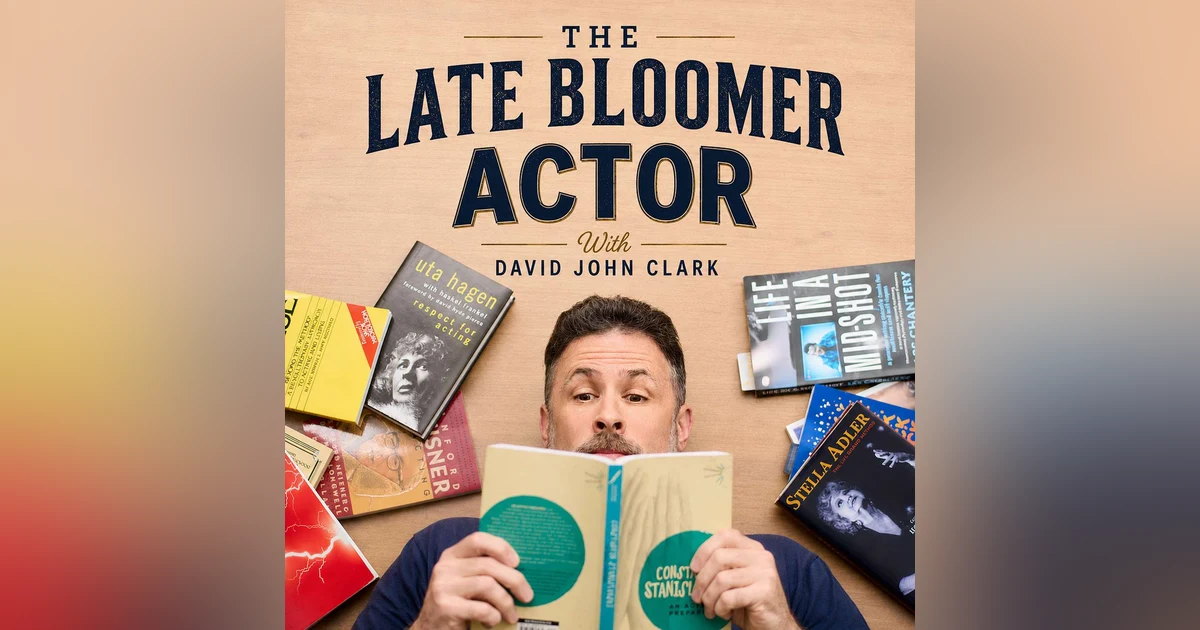

Five Years of The Late Bloomer Actor Podcast: Voicemails from Guests and a Look Ahead This episode celebrates five years of The Late Bloomer Actor with voicemail messages from past guests and collaborators. The messages offer a glimpse of the community the podcast has built, connecting actors, creative support, and resources across different stages of a career. David John Clark records from a hotel in Kuala Lumpur while traveling for work, then reflects on the journey so far and thanks liste...

 Apple Podcasts

 Spotify

 Castro

 RSS Feed
Five Years of The Late Bloomer Actor Podcast: Voicemails from Guests and a Look Ahead
This episode celebrates five years of The Late Bloomer Actor with voicemail messages from past guests and collaborators. The messages offer a glimpse of the community the podcast has built, connecting actors, creative support, and resources across different stages of a career.
David John Clark records from a hotel in Kuala Lumpur while traveling for work, then reflects on the journey so far and thanks listeners for being part of the show. The episode looks ahead to what’s next for the podcast—and closes with David’s familiar sign-off: “I’ll see you on set.”
TEXT or VOICEMAIL The Late Bloomer Actor a Question or Comment.
This show is supported by Castability. Castability is an audition simulator that delivers real feedback from casting professionals, reveals powerful data insights, and showcases talent in the first-ever public, casting-vetted actor gallery.
This episode was recorded on RiversideFM.
And I listen to my favourite podcasts on TrueFans. TrueFans is a podcasting marketplace where listeners discover the podcasts they love but only pay the price they want for the value they receive. Download in your Apple or Google playstores.
Check out The Secret Actor Society a community and educational platform to help propel your career forward. Use this link for 40% off your first two payments (after two free trial months.)
I am a huge advocate for and user of WeAudition - an online community for self-taping and auditions. Use the PROMO code: LATEBLOOMER for 25% of your membership.
Please subscribe to the show at The Late Bloomer Actor website.
...
00:00 - Celebrating Five Years of The Late Bloomer Actor Opening
02:04 - Navigating Technology and Podcasting Challenges
03:03 - The Quirky World of Self-Tape Auditions
05:43 - The Slow Burn of an Acting Career
07:32 - Learning and Growing as an Actor
09:35 - Taking Risks in Acting
10:37 - Navigating Casting Challenges
11:35 - Building Momentum in Acting
12:45 - Strategic Career Shifts
13:59 - The Importance of Strategy in Acting
15:39 - Future Aspirations in Acting
15:39 - Creating Safe Work Environments
20:10 - Introduction and Reflection on the Podcast Journey
22:40 - The Late Bloomer Actor: A Journey of Discovery
22:58 - Lessons Learned from Mentors and Life Experiences
25:32 - The Business Side of Acting
26:49 - Creating Your Own Opportunities
28:10 - Greg Poppleton
28:24 - Must-Do's and Don'ts for Aspiring Actors
32:55 - Darren Darnborough - WeAudition
35:50 - Thomas M Copeland
41:04 - Alexa Morden - The 98% Podcast
44:22 - Robert Peterpaul - How We Role podcast
45:31 - Jacqui Darbyshire
57:21 - Trudy Ager
01:16:15 - Early Bloomers on the podcast
01:18:52 - The Evolution of the Podcast
01:20:40 - Revisiting Universal Basic Income with Conrad Shaw
01:24:00 - Key Takeaways from Five Seasons
01:27:12 - Epilogue: Testimonial Voicemails from previous guests
01:28:36 - Clare Pickering - Late Bloomers Fest
01:29:20 - Alexa Morden - The 98% podcast
01:31:25 - Kym Jackson - Secret Actor Society
01:32:54 - Emily Joy - Joy Studio
01:34:05 - Janet McMordie - Second Act Actors podcast
01:36:19 - Greg Poppleton
01:36:43 - Connor Clark
01:38:38 - CELEBRATION: 5 years of The Late Bloomer Actor
David John Clark (00:00)
Good morning, good morning, good morning, good evening, good afternoon. Wherever you are in the world, you are coming to The Late Bloomer Actor. I am David John Clark. You all will know that because you've been watching and listening to the podcast for five years now. Happy anniversary. It is my fifth season of the show. Well, we're coming to the end of the fifth season, and this is my end of year special.
Which I like to do every year and try to come up with something different. And this year, well, I thought it made a lot of sense to have a end-of-year special five-year anniversary celebration for five wonderful years of the show since I started. We're gonna talk about it. That's I think that's that's over fifty episodes because I do one a one a month for ten months. So that's fifty primary episodes and then some Off Script episodes, which I started a couple of years ago. And yeah, so here we are.
As you can see, I'm wearing my trusty Late Bloomer Actor t-shirt. Thank you to my family that gave it to me for Father's Day or birthday a couple of years ago. I cannot remember. And here we go. We have Stephen Walker in the house already. This is wonderful.
I'm gonna bring him straight in and we'll go from there. How's that sound?
Well, ladies and gentlemen, we have in the studio today Mr. Stephen Walker, the TikTok Spider Man himself, if that brings back memories. Stephen, welcome.
Stephen Walker (01:20)
Yeah. It certainly brings back memories for me. It's still going
David John Clark (01:23)
The
Stephen Walker (01:23)
strong at however many million views.
David John Clark (01:25)
I love it. I love it. It's it's so funny with with social media and and videos about when you're uploading and you know, we we're actors and you know, we we were obviously looking for trying to get that connection with the audiences and that, but it's the weirdest videos that sometimes make it, isn't it? Mm.
Stephen Walker (01:43)
Yeah. Yeah.
But sometimes it's inexplicable and and as you've probably seen a little bit of the the journey as a Self Tape May person yourself,
David John Clark (01:52)
Mm-hmm.
Stephen Walker (01:54)
that every year I I do the Self Tape May and I upload to socials, generally speaking just Instagram, TikTok these days as well.
David John Clark (02:04)
Mm.
Stephen Walker (02:05)
And it sometimes it's inexplicable as to what gets traction.
David John Clark (02:10)
Yeah.
Stephen Walker (02:11)
And
then it just seems to feed itself. And so if I look across my Self Tape May submissions for this year, I mean they're all kind of, you know, nothing special, nothing different in the way that I've treated them this year compared to to previous years.
David John Clark (02:28)
Previous years. Yeah, ditto. Mm.
Stephen Walker (02:30)
And a lot of them coming from WeAudition and a lot of them just yeah out of the blue. And
stuff that I'd worked on, occasional ones that I'd been cast in, that sort of stuff. They'd get pretty good traction. They'd get, you know, a couple of thousand views each, and that's that's fantastic. I like that. But one but
David John Clark (02:47)
Mm.
Stephen Walker (02:48)
one in particular has hit in Instagram alone well over three hundred thousand views. And to me it's nothing special. As a self-tape, it's
It's quirky. It's something that I use the space in, but a a lot of my tapes are quirky. They're more on the comedy end. A lot of the tapes I use
David John Clark (03:11)
I do like them!
Stephen Walker (03:13)
I use props. A lot of the tapes I I use the space. I'm either walking in or leaving or moving left to right or whatever, coming right into camera. And so this one to me was no different.
It was a WeAudition tape. The stats show that it gained me like 3,000 new followers alone from that one piece. It's been shared by acting schools, it's had any number of comments on there from around the globe, it's had people
want to engage and talk about how I did X, why I chose Y. Very, very few people are negative about it, you know, because I I I decided
David John Clark (03:51)
That's
Stephen Walker (03:53)
that I wanted to be really gross in this particular tape and and it's a crime scene and the script shows that I'm eating a a donut or a churros, I think it is. And so I I yeah, and and so I wanna what's the
David John Clark (04:03)
I think I remember that one. I did the same scene. Yeah. Hm.
Stephen Walker (04:06)
grossest thing that this quirky character can do? And so if you're on a crime scene, you know
Lick the lick the glove, you know, that's got sugar
David John Clark (04:13)
Ha ha.
Stephen Walker (04:14)
on it. That's like it's you cannot do that. It's just the it's just so and so I had one or two comments out of out of the thousands of comments that said, I think you licked the gloves too much. And it's fair enough. I wanted to lick one, but then the rest just happened, I was unconscious, unconsciously doing it. And one comment that said, I don't like props and you shouldn't have done that. And it's like, okay.
Thanks. Thousands of other people disagree and acting schools that are sharing it. And so and so yeah, it's it's you you can't bin it down. To me, if you
went
David John Clark (04:50)
No.
Stephen Walker (04:50)
out there to try and get that sort of engagement on an an acting based or just an influencer based tape on on socials, it's hit and miss, you wouldn't know. And I it's
David John Clark (04:59)
No.
Stephen Walker (05:00)
it's still inexplicable to me as to why that one, when I was doing as many
quirky things or different roles
David John Clark (05:05)
Yeah.
Stephen Walker (05:06)
and I think it's my Self Tape May's if I go back and I look at them across the six years or whatever I've been doing them for, I look back at the original ones and think, that's embarrassing. And you look down, you go, yeah, they're they're really good and they're just totally
David John Clark (05:19)
Mm.
Stephen Walker (05:20)
differently received by the the number of views or the number of
comments and and so on. You know, even had people
David John Clark (05:24)
That's interesting, isn't it?
Stephen Walker (05:26)
I even had direct casting. Where are you based? I'd love to cast you in a thing. I said, Australia, damn, we're England,
David John Clark (05:30)
Wow.
Stephen Walker (05:33)
or I we're in East Coast, we're in Boston, or we're in LA or in somewhere. Oh, Man! And others saying you you really need to reach out to some US agents if you don't have one already and others saying what later, what? You're not American. I just thought, you know, and that's I always love that.
David John Clark (05:49)
Just assumed. wow. That
is that's fantastic. And that's really, really good to chat about because you came onto the show in season one. So that's five years ago. We've known each other for a while now through The Audition Technique with Greg Apps.
So over the five years since you've came on the show, we've been a part of The Audition Technique together. We've done some scenes online, we've assisted each other, et cetera, et cetera. And you've grown so much as an actor. How do you see your journey? Because my show is all about my journey and the journey of others and acting and learning from each
Stephen Walker (06:24)
Yeah. Yeah.
David John Clark (06:25)
other. So what has
been one of the biggest things that has propelled your career forward since being on the show. Do you see a significant change at any point, or has it just been that slow climb to where you are today?
Stephen Walker (06:39)
Well,
I believe it's a slow burn. It's been a slow burn and I often have an answer, the same answer that when people say, how long you been doing this for? And I say, about
five years, six years, and then I I've got to realize, no, it's that's not. It's actually it's actually been longer now. It's
David John Clark (06:56)
Mm.
Stephen Walker (06:57)
I'm heading into my tenth year of actually doing this seriously and focusing on this to the exclusion of everything else. And it has been a slow burn. It has been a journey of learning and trial and error and and putting myself out there
and making mistakes. And look, as I said, I go back five years, six years and look at those Self Tape May tapes and just think, I'd do that differently. And part of that is because I've learnt different techniques.
Part of it is embracing
particular techniques and knowing what works and what doesn't work for me. Engaging with the likes of The Audition Technique, The Real Life Actor, StageMilk, the dangerous actor.
David John Clark (07:40)
Les Chantery. Yeah. Yeah, I just finished my
Stephen Walker (07:41)
Les. Yeah, yeah, yeah. You know that
David John Clark (07:43)
four weeks with him yesterday. So yeah, love it.
Stephen Walker (07:44)
Okay. Yeah. So there's there
there's certain there's certain standouts across the mix. In my previous careers I've been somewhat of a perfectionist and someone that controls the situation. Everything
David John Clark (07:57)
Mm-hmm.
Stephen Walker (07:58)
about me and my work and around me I'm in complete and utter control.
But it's a recognition and that learning that this is a business where you have zero control. And accepting that. It's been hard to accept that. I've tried to find ways where I could gain control, but then you realize there's only some things you can. Decisions.
David John Clark (08:15)
Mm-hmm.
Stephen Walker (08:15)
You can control, an audition from what you're doing, but you you're not gonna control outcomes. You're not gonna control decisions, you're not gonna control opportunities unless you make them.
There's learning the techniques that I like that work for me as opposed to something
David John Clark (08:30)
Love that.
Stephen Walker (08:30)
that is up on a pedestal that you go this is the you this is the way to do it. Part of my journey has been about trying to connect with casting along the way to get an understanding of who
does what? Not not so much getting in front of casting so pick me, pick me, but getting in front of casting, right? Okay, so you don't like this and you like that and you like eyes and you don't like this lighting and you like that lighting and you want props and you want, you know, bring in a tank if you can, if it calls for it, it doesn't matter. And recognizing that the only way forward for me is to take risks.
Take risks. And I'm not talking about
David John Clark (09:07)
Love that. Mm-hmm.
Stephen Walker (09:08)
I'm not talking about say make bold choices in your decision because what the fuck does that mean? But it's it's just it's taking it's taking a risk, whether it's a calculated risk, whether it's in an audition, whether it's on set and coming with ideas and being vocal if the opportunity presents itself.
Vocal about what you will and you won't do. For me, I will always be vocal. Because of all sorts of historical and personal reasons why I don't smoke, is that I'm not gonna smoke, even if it's a prop cigarette. I'm not gonna do, you know, and and so we'll offer suggestions. There's an example that I'm about to shoot in a couple of weeks. It's
a local independent short thing and I've just
David John Clark (09:46)
Mm-hmm.
Stephen Walker (09:47)
made suggestions that it's in fact we change it for another character doing this particular thing rather than me. But actually having the confidence to be able to say, I can't do that. Having the confidence in a casting process. And it's happened to me a couple of times now where I've had concurrent bookings that they've kind of booked on the same day and it's like, what do you do? And that
David John Clark (10:08)
It's a
bit like the bit like the auditions that are always come through when you're on holiday. Yeah.
Stephen Walker (10:12)
yeah, when you're on holidays, exactly.
Being able to being able to recognise that it does happen and the sooner you can actually pick one and say, I can't because .... Casting, production companies, certainly directors and producers and studios, but particularly castings, you're not gonna end up in the black book and never get an audition again.
David John Clark (10:31)
Mm-hmm.
Stephen Walker (10:31)
It's recognizing that you can have a voice and it doesn't have to be the end of the the world. But some of the things that's changed for me in the last eighteen months was
that momentum that you can build with a particular casting. And so for me, it was Greg's casting of me in Spit. And having having
David John Clark (10:51)
Yes. Fantastic show.
Stephen Walker (10:53)
a role where I'm high up on the on the the call sheet, number four or something like that. It's a lot of screen time, even if there's not a lot of dialogue, it's lot of screen time with my guy sort of carrying things along the way. It's an opportunity
That presents itself on those rare occasions where you can say, now's the chance to actually look at different tier of agent, different opportunities for marketing, promotion to casting and so on. And so as a result of that work, I switched agents and decided that now is the
time for us to put out the message in their marketing and their packaging of me to say Steve doesn't do the little bit parts anymore.
We're going for big stuff. Now that that's a hard thing to shift into just mentally when you you're used to getting a whole lot of auditions on a regular basis.
to suddenly go,
been a few months. There's no because there's nothing because
David John Clark (11:57)
had nothing mm, 'cause you're aiming higher.
Stephen Walker (11:59)
there are fewer roles. There are fewer roles for someone like me and the age that I am. That's just the nature of it. Hopefully there are fewer people in my age bracket that can fit it, but there's fewer roles and we're going for leads and we're going for recurring and we're going for series regular and so on.
Or if we are going for something that's smaller, it's in a big ticket item. You know, it's a it's a big it's
David John Clark (12:20)
Yes. Yeah. Mm.
Stephen Walker (12:22)
a big production.
David John Clark (12:23)
So has that strategy just happened, for want of a better word, accidentally? Or do you feel that over those five years you've had that strategy in your head? So you've you talked about setting that up with a new agent now and and making determinations of not doing somethings
A lot of things we talk about on the podcast is the business side of acting and strategy would be one of them.
Stephen Walker (12:43)
There's been a couple of elements of the strategy and one that is is you can't act until the right thing comes along, which is the at what point do you actually move into upgrading an agent? And it's not about, I'm not getting work, so I'm gonna change agents. It's about saying, Okay, now I need to start looking at other bigger, better things. How are we gonna change
David John Clark (13:02)
Yes.
Stephen Walker (13:03)
that? What comes along? You can't just decide
Okay, I've done ten co star roles now, I'm now going to bid for another agent. Well you can. Of course you can, because you've got
David John Clark (13:13)
Course. Hm.
Stephen Walker (13:13)
some credit under your belt. But is there something that gives a bit of a strategic leg up, which is here's a big thing, hey, let's let's pivot to a new agent and while we're there, hey agent, I don't want to do this sort of work anymore. I wanna do this bigger stuff. And actually then finding, you know, getting that. So you could pivot to a new agent.
But if you want to pivot direction, you've got to have something that allows that pivot, I think. Something that's
David John Clark (13:39)
Okay.
Stephen Walker (13:39)
bigger and better and and and so on. I think I've always had a strategic approach when it comes down to what can you control? And what I can control is learning about casting, understanding.
Got that and then then pivoting my individual auditions to match who is it that is casting me, either the individual or the organization, to know that, if it's a McGregor's, I can do this. If it's a Dave Newman, I can't do that. I've got to do it this way. Just in order to get their attention, which just gives that little bit, that little tiny bit of an edge that means they might
actually watch. And so it's understanding what they want and and building that audition to that has been a strategy from day one. And then learning about others in the mix, who's doing what, what's coming and so on.
David John Clark (14:29)
I love And that ties it all down into what the five years of my podcast has really focused on a lot, just through my strategy as a podcaster, but also just naturally from talking to people. It's about that business side of acting, about that strategy and about building your toolbox, so to speak.
You've got the floor for the moment, five years of The Late Bloomer Actor podcast, of which you've been a big part of that journey, do you have anything to say to the audiences and everyone that's been involved in the show?
Stephen Walker (14:58)
It's one of those fantastic podcasts that are out there and something just because I have a connection to you, does not make me biased in any way, shape, or form about the podcast. In fact, it was only only last week I shared links to the podcast to an emerging actor up here in the the Sunshine
David John Clark (15:14)
thank you.
Stephen Walker (15:15)
Coast, who's come back to acting in their fifties and I said, Well, I
David John Clark (15:18)
Love it.
Stephen Walker (15:19)
have a podcast for you. So keep doing it.
We all love it. Those those of a of a certain age.
David John Clark (15:28)
And it does it does reach out to all audiences as well. So and over the time I just like the acting journey, how we change. So I'm going to go back and show the promo from your episode. So it's five years ago.
It's to show that that journey of where we are. A we've a we've aged and I d can't remember whether I'm actually in the promo, but give me two seconds.
I'm gonna s share my screen.
Let's hope this works.
There we go. There we go.
Stephen Walker (16:40)
I think David the standout there is that our voices have grown more mellow.
David John Clark (16:48)
More mellow. I like that. I like that.
Stephen Walker (16:49)
Ha ha.
David John Clark (16:52)
Or we're just talking slower in our old age.
Stephen Walker (16:55)
Just talk it slower now, that's right. No, maybe
David John Clark (16:58)
Awesome.
Stephen Walker (16:58)
maybe we've got we've been able to afford more expensive microphones.
David John Clark (17:03)
That too. And a better background. And better
sounding. Stephen, thank you very much for coming on. As I said, you're one of the first guests to come on and you've been on before in a previous end of year special. Our journey is together and has been together. We look at each other's career and we support each other and and that's what I love about this environment, this network that we have as actors. So I really appreciate your support.
I really appreciate what you do for the podcast and like you said, sharing it when you have those opportunities. And I wish you all the best for your future career and may we get that ongoing screen roll together someday when I retire and we can play
Stephen Walker (17:41)
Like
David John Clark (17:42)
buddy cops.
Stephen Walker (17:43)
Absolutely. Absolutely. Well,
David John Clark (17:45)
Or
Stephen Walker (17:45)
I'll s see you in five years.
David John Clark (17:47)
Most definitely. Thank you very much.
David John Clark (17:50)
Well, there you go. That was Mr. Stephen Walker. How fantastic to have him jump on board. And I really appreciate that, Stephen. You've been a big part of the podcast, big part of my journey as an actor. And I feel that our journeys are are following each other. I'm a little bit behind you, but that's fantastic. There was certainly some great points there that have come from.
what we've talked about. So I just wanted to go back, guys, before we go on to our next guest. Where we've been, it's five seasons. And somewhere along the way I realized I'd accidentally created something much bigger than I originally intended. When I started The Late Bloomer Actor, I thought I was making a podcast about acting. More specifically, I suppose I was making a podcast about my attempt to become
an actor later in life, my journey and the people that I'd met. That's that's the promo for the show. I wanted answers. How do I get better? How do I get auditions? How do I deal with rejection? How do I get an agent? How do you keep an agent? How how do I actually make a career out of this? You know, guys, after five seasons, I had the extraordinary privilege of asking those questions to actors, some casting directors, agents, coaches, producers, creatives.
And people working in all sorts of corners of the industry. What I discovered was the answers weren't always what I expected. So this episode isn't going to be a countdown of my favorite episodes. It's not even going to try and squeeze every single guest into 45 minutes because that would be bloody impossible. And everyone's busy. But I really appreciate the people that are coming on board and the people that are leaving some voicemails,
which I'll be playing later in the episode. Instead, I want to tell the story of what Five Seasons of Conversations has taught me. And hopefully, if you're new to the podcast, you'll hear a few things here that make you think. Right. I need to go back and listen to that episode. Or all the episodes. Binging is such a big thing, you can binge The Late Bloomer Actor podcast on all your favorite podcast platforms or YouTube.
All right, let's go back to the beginning. I was already a late bloomer when I started the podcast. I started acting around the age of forty and I was trying to work out this strange new world where suddenly everyone seemed to know something I didn't. And that's probably the first thing I wanted to say to anybody listening who is new to acting. You don't know what you don't know. That's one of the reasons I started this podcast, to share what I learnt over that journey and what I learnt from people that
I passed or that I met on that journey. That's that's why I run my Facebook page here in Adelaide, because I believed in sharing that information. If I could save one actor, the heartache of of learning, of not knowing something when you needed to know it, that would be a great thing. I wanted to talk to people who knew more than me.
And one of the earliest lessons I got was that acting isn't something you simply learn and then you're finished. It's a process. Now I wanted to bring on a clip quickly of one of my favorite mentors, one of my biggest mentors is Jeff Seymour, aka The Real Life Actor. This is from his episode in season two of episode one. So my second year. I'm just gonna play that here. For those watching on YouTube, hopefully you can see my screen share. For those listening in the podcast world, you don't need to see it. It's just
like talking heads, that's what we are in podcast, videos, not so exciting, but this is what Jeff had to say.
We do our best work in real life. That's what he said. It sounds simple, but I think that's one of the things that really struck me early on. Because when you start acting later in life, you can sometimes think you're at a disadvantage. You're looking at people who've been acting since they were five or ten or eighteen, and you're thinking, Well shit. I got a lot of catching up to do.
But then you realise I've actually lived, I've had jobs, I've had relationships, I've fucked up things. I've experienced grief and happiness and embarrassment and fear and all of the other wonderful stuff that makes us human. And all of that can become part of the actor.
That's something that came up again years later with Ivana Chubbuck who was just wonderful to have on the show. I've got her book up there behind me. So again, this is part of the journey and the people that I've been able to meet and talk with and share with you. So let's just have a quick listen to what Ivana has to say.
it's a pity because as actors and as people we evolve, we learn, we grow, we grow
Same.
mistakes that we've made in the past, it's how we become better actors. It's a pity as a society we don't do the same thing and learn and grow and don't make the same mistakes and we continually go and continue on that same path, don't we? Which is a bit sad. But it makes storytelling interesting, doesn't it? You get ideas from watching something when you're just being entertained and it comes into your system subliminally, you're going like that person is really fighting t to overcome
I hope you got something from that. I've edited in such a way that's not quite hitting the mark that I wanted to bring up because I had a quote from her and I just can't find it in time for this recording, but she did quote somewhere in that talk, that discussion that we're having about life experience, and she says, Your life experience is what turns a two dimensional script into a three dimensional human being.
So it was that it was that quote that I was hoping to really find, and I just don't have the time to go through the whole thing and find it. But I the the the concept is is that your life experience is what turns a two-dimensional script into a three-dimensional human being. Just just think about that from a perspective of a late bloomer, and what I've learned that is that well, suddenly the thing I thought might be my disadvantage could actually be an advantage. That's one of the themes that kept coming back through the podcast.
You're not necessarily late. You're bringing something different. Okay. Okay. So it's moving on. So so how do I get better? Of course, knowing that doesn't mean you can just walk in onto a set and magically become brilliant. You've still got to do the work. And one of the things I've learned over five seasons is just how much work there is behind what we eventually see on screen. Training, script analysis, audition technique, improvisation, voice.
Movement, self tapes, and most importantly actually getting comfortable with being uncomfortable.
Greg Poppleton who was just recently on, put it brilliantly when we talked about the audition technique this year. And he said.
As many
Ego stroking. It's like a gym. Acting classes, you're there to fail. That's what you're there to do, because you can only learn by failing.
I love that. You're there to fail. Because if you're terrified of getting it wrong, you're probably not taking enough risks. And and that's another lesson for me. You can't wait until you're the you're perfect before you put yourself out there. You've you've got to actually do the thing. Ivana talked about making bold choices and Greg talked about learning.
Greg also said later on in his interview, you're never too old to learn. And life is a process of learning. That sentence probably belongs on the front page of the late blooming actor, because that's really what this whole thing has been. Learning. And not just learning from the guests and learning from the conversations, learning from the mistakes, learning from the auditions I didn't get, learning from the auditions I did get, and learning from the people around me.
And then there's rejection. Of course, sooner or later every actor discovers the slightly inconvenient truth. You can do all the work and still not get the job. Welcome to acting. And this is probably one of the biggest areas where the podcast changed my thinking. Because early on, I think I was still looking at acting in terms of outcomes. Did I get the audition? Did I get the callback? Did I get the job? Was I good enough?
Say that all the time. Maybe I wasn't good enough. And over time I started to realise that those things aren't entirely within my control.
Bringing me back to discussion I had with Rachel Baker, who talked a lot about mindset and why I always always look over my shoulder for my wife is big on mindsets and about manifestations, and it's something that I still really need to focus on because I think it is such a big thing. Rachel said in her interview, way back in season, where are we? Season three, episode four. No one else is going to be excited about your acting
career if you are not. Wow. That is a bloody good kick up the ass, as they say. Because nobody's going to care about your career as much as you do. Not your agent, not your casting director, not your friends, not your family. It's yours. And that doesn't mean you have to do everything yourself. It means you have to own it.
Albert Bamanti took this even further. He's an agent out of New York. And he said, You are the CEO of your company. Of you. And that was another big shift for me. I started thinking less about how do I get someone to give me a job and more about what I can actually do today? And that's a much healthier question because you can do something today. You can train, you can write, you can self tape, you can contact somebody.
You can make something. You can improve your headshots. You can work on your showreel. You can watch an Australian production and actually sit through the credits. You can learn. You can create. You can connect. You can keep moving. And sometimes that's the win. And that's what the five seasons has been about. And I've broken my notes up here into chapters. And we've just done the first three chapters of nine.
Of what I wanted to talk about and bring in hopefully some more guests and some videos and some and some audio from our previous guests because that has been the journey. So I hope you're enjoying that so far and and you see where I'm going with this.
Because you don't have to do this alone.
One of the biggest discoveries I've got of the whole podcast is acting can be incredibly lonely. And so can podcasting. Incredibly lonely. And never getting the feedback, which is big in podcasting and bigger, even bigger in acting. You're not getting that feedback for your self tapes, for your your auditions. You're often sitting at home waiting for the next audition, waiting for an email, waiting for a callback, waiting for your agent.
Waiting for somebody to tell you that you're good enough. The more I spoke to people, the more I realized actors need actors.
Darren Darnborough from WeAudition, he talked about this beautifully when we spoke and talked about the wider acting community.
It's always the cornerstone's always been community. It's always been about bringing people together in one way or another. And I think that's one of the key factors in life that we all need in addition to food and shelter. You know, is the the Maslow's hierarchy of needs. But existing in a community, feeling part of something, having people to lean on. And then if you think about the actor business, when we're working, when we're on set, it's great. We have a community, we have all the crew there, we have the other cast members.
And as you said there, but most of the time actors aren't working. And that's the problem. When you're working, you're surrounded by people. When you're not working, you're often sitting at home wondering whether you're the only person in the world who isn't working. You're not. And that's become a really important theme for me. The community.
You know, the community comes across a lot in all my episodes with most of my guests and the two thousand twenty-five Community for Creative Special really brought that home. Melanie Perry said something that I think sums it up beautifully. What the pandemic has really shown us is that people need people. Yep, people need people. And actors definitely need people. And not just when you're struggling, not just when you've got an audition, but when you're doing well too.
People to celebrate with, people to collaborate with, and people to learn from. People to understand why you why you're excited about getting a two line role that nobody else in your household gives a shit about. And that's one of the reasons I think the podcast itself has become what it is. The conversations created connections. The connections created community. And the community created more conversations. It's a bloody good cycle.
Yeah, this has been said over and over and even with Stephen Walker earlier on in this episode, we were talking acting is a business. I said that from the outset. When I took up acting, I treated it as a business and I pushed that so much in the whole five seasons. It's continually comes up about the business side of acting and how important it is if you wanna make it work.
The podcast changed along the way. The podcast itself changed. Or perhaps I changed. I started asking a different question, not just how do I become a better actor, but how do I actually build a sustainable acting career? And that came back to the business side of acting. That became a major theme of season four and particularly season five. Because here's the thing, guys. You can love acting, you can be passionate about acting.
You can be incredibly talented at acting, and you can still be absolutely hopeless at running the business of being an actor. Thomas M Copeland had a great story about a seventy year old actor.
One of the actors is a man named Paul Al
So yeah, I thought that was really cool and I think that, you know, as a late bloomer actor, that gave me some really interesting insight to rethink about, you know, some of those insecurities when you said that it meant a lot to me.
I love that story because it completely changes the way you think about time. If you're 20, 30, 40, 50, 60, you're not necessarily running out of time. You might actually be building something that lasts for decades. And you know, Thomas made another really good point later in that episode. He said, What we're talking about here is professionalism. That's the business side. Being professional. Understanding that your acting career is something that you manage.
Yeah, and and just going back to the the seventy year old actor, it's it doesn't matter whether you're seventy or fifty, it's about knowing that you can do this forever, for as long as you want. You it you You don't have to worry. Now, obviously for the younger actors, the non late blooming actors, they've got to, you know, they're taking it up as a career. They've got to pay their bills, they've got to try and prepare for retirement or pay for their future. So
It it's it's tough but it's tough at whatever part of the journey is. So it's it's all about looking back and then what the podcast has been about, is about focusing on what you can do and what you can do to make it work. And then making sure you tick all the boxes with things such as the business side of acting.
Yeah, Albert Bramante, the again the agent from New York, which was great to have him on the show because he's done the thesis in acting and he talks about it. So make sure you look that episode up. He touched on the idea of creating your own work, you know. And and for a lot of people, including myself, the idea of creating rather than waiting has probably become one of the biggest changes in my own thinking. Because the old model can feel like get an agent, get an audition, get a job. Repeat.
But there are other things you can do. You can make your own work, build relationships, create content, collaborate, and learn. And as I've discovered through the podcast itself, create your own platform, which is basically what I've been doing for five seasons, creating The Late Bloomer Actor community, The Late Bloomer Actor platform on social media and through the podcast itself.
It's a tough world, especially to reach out. I I've tried it a few times because it's always, I've got no funding, want someone to volunteer to help make my film and I I just personally I try not to do that because it's I just don't want I want to be the person that can pay you. I understand that. And I've had people come to me, but you do so much for the community, David, they'll give it back. And they do. They certainly do. So if you've got that ability, if you've got that creative
ability to make your own work, then do it. Get it out there and promote yourself. I do that through my podcast and because I can own it. I'm very autonomous in how I do things as much as I know we need that community. These are two things that I've learned through the podcast is about trying to make both worlds meld into one.
Right, going on. In my notes section, chapter six, we're up to. It may not necessarily fall in this order. So, but you know, it just shows you that I've come through with some sort of ideas and creativity to bring this episode to you. Stop giving the industry all your power. And perhaps this is where everything starts coming together. Because once you understand the craft, once you understand the business, and once you have people around you.
You start to realize something else. The industry doesn't get to decide whether you're an actor.
You Alexa Morden put it brilliantly. She said, We have to stop giving the industry so much
power.
That's what my focus is as an acting coach as well is you will do good auditions and you will book jobs if you're good at what you do and you have a good time doing it. So let's get back to that. Let's get to back to the fun and the freedom and the frivolity of
It goes back to the quote that I use. We have to stop giving the industry so much power. Is what we were talking about there is bringing it all back in. So on one hand I was we're talking about acting and and and training and and getting all that there. And then I've I've went through and said, No, but you know, you need to focus on the business side of acting as well. But I've almost crossed that out by that clip that I've just played. But no, it's about that balance. It's about bringing everything together.
So stop giving the industry so much power, stop expecting so much, but making it work for you and finding that balance. Because how often, you know, do we do exactly that? We don't get the audition, I'm not good enough. We don't get the call back, maybe I'm too old, we don't book, maybe I'm not really an actor. That's what Alexa was talking about, is that just to get the joy of acting back and
that's come across so many times is to have that joy of acting, but be aware of what you need to do, to be aware of the business side of acting, but don't get that become engrossed by that, so to speak. Alexa also said something that I think is even more powerful. She said, You are enough right now, exactly how you are. You do not need external validation to make you feel like an actor.
That's a very different way of looking at the business. And it's a very different way of looking at yourself. The job is the job, the booking is the booking. But your identity as an actor doesn't have to rise and fall with every email will or with every phone call.
this industry and and I know for me it makes me feel more valid as a performer. Must jump this I will say don't put your worth into bookings. Don't don't value yourself as an actor or not call yourself an actor just because you haven't booked a role in a certain amount of time.
You are an actor. You do something every day that makes you feel like an actor. And nobody can take that away from you. Love it. I love it.
I played that whole section there, something you do and something you don't. Robert Peterpaul in his podcast
because it was a game you mentioned we saw that we talked about his game. It's in his podcast, How We Roll, which is a fantastic podcast. I thoroughly recommend you checking it out. Now, Robert Peter Paul was from episode eight of season four. So I really wanted to put that takeaway in there because that was probably one of the my favorite lessons from the five seasons. Do something every day that makes you feel like an actor. Because that
is something you can control.
David John Clark (43:11)
Well, in the room this morning, we have Jacqueline. Jacqueline. Jacqueline. Jacqui I always call you Jacqui. Jacqui Darbyshire. Welcome. How are you?
Jacqueline Darbyshire (43:20)
I'm great Dave, how are you?
David John Clark (43:22)
Good
now it has been five years since you were on the show because you were one of my first guests on season one.
Jacqueline Darbyshire (43:30)
I was, it was February, I remember it because it's my birthday month.
David John Clark (43:33)
Yes.
You know what's really bad about that? It
Jacqueline Darbyshire (43:36)
What?
David John Clark (43:36)
makes us five years older.
Jacqueline Darbyshire (43:40)
I've given up on the numbers game now. I'm
just sort of, I got stuck at, what is it, 37, I think.
David John Clark (43:47)
I thought you were 37. Still. Hmm. I love that.
Jacqueline Darbyshire (43:49)
yeah, I am, I am, I am.
David John Clark (43:50)
Well, thank you very much for coming on and celebrating the five year anniversary of The Late Bloomer Actor. Jacqui, I just want to ask, in the five years since you've been on the show, what have you taken away with our discussions and with the podcast itself? Now I know you listen to every episode religiously, so what what would you say is the best thing that you know about the show from
your experience being on it or over the last five years?
Jacqueline Darbyshire (44:16)
Well, thank you again for sort of inviting me five years ago. Can't believe where the five years go.
David John Clark (44:22)
Mm-hmm.
Jacqueline Darbyshire (44:23)
And also thank you for inviting me back on for the fifth year. So go you for
David John Clark (44:26)
My pleasure.
Jacqueline Darbyshire (44:28)
your running all this time of five years and, you know, kicking the ball out of the park really with the late bloomer. So I can honestly say the late bloomer, whenever I meet anybody,
wherever it is around the world, whether it's Mexico, New York, LA, UK, here, wherever, I always start off and say, I'm a late bloomer and there's a podcast. So I always direct
David John Clark (44:54)
Love it.
Jacqueline Darbyshire (44:55)
people to that so that they can get the gist of the essence of who I am and who you are and where it all started from. So for me, it's a really good intro. And I was a late bloomer, as you know, completely.
David John Clark (45:08)
Mm-hmm.
Jacqueline Darbyshire (45:09)
started with you, in Adelaide and that sort of opened the doors. So, so for me, your podcast and all of the knowledge that you give and that you gain, I am from different people. I learn. It's that whole thing about learning different tools to put in your toolbox. Or sometimes if you're, you know, cause acting can be quite a hard gig.
David John Clark (45:36)
Mm-hmm.
Jacqueline Darbyshire (45:36)
Sometimes
if you have in a bit of a lull and a low time, the good thing about your podcast is it gets you back on the track again. So that's what
David John Clark (45:44)
I love it.
Jacqueline Darbyshire (45:45)
I have learned from that.
David John Clark (45:47)
I love it. That's fantastic. And you were just you know, dropping some cities down there. You get around, don't you, in
your travels?
Jacqueline Darbyshire (45:53)
I do.
Yeah, I do.
David John Clark (45:57)
And that's that's mostly for your acting. You're pushing the boundaries, aren't you? Is that something that you it's a capability that you have, I know you've got that ability to do it. So do you encourage that from an acting perspective if you've got that ability to try and reach out, especially to the States?
Jacqueline Darbyshire (46:13)
This is, this is my analogy. If you throw enough, and I can't really swear on, on the thing, but anyway, if you throw
David John Clark (46:18)
Mm-hmm.
Jacqueline Darbyshire (46:18)
enough at the wall, something sticks. And by doing what I've done over the last five years since, starting, as a late bloomer with you on the podcast
David John Clark (46:27)
Mm-hmm.
Jacqueline Darbyshire (46:28)
is I have managed to film the Hollywood awards. I got invited by the Hollywood times to film the Hollywood awards one year.
David John Clark (46:35)
Nice.
Jacqueline Darbyshire (46:36)
I also got invited back two weeks later to film the LGBTQTI awards, which was, no,
David John Clark (46:42)
Wow. I didn't know that.
Jacqueline Darbyshire (46:44)
no, you know, me, I'm quietly away. And that was amazing. And I actually got offered to go back the following year, but the timings were just wrong for me and I couldn't,
David John Clark (46:52)
Okay.
Jacqueline Darbyshire (46:53)
I couldn't do it sadly. Otherwise I would still be doing it year on year. And I was actually on the other side of the camera. So it gave me an insight
to what it was like to see an actor on the red carpet, to see an actor in a different way. And what that did for me was it enabled me to realize that everybody wants you to be comfortable on set, on camera, everything. And that's what people came up to me and said, because I dressed like an actress, like I was filming, but I still dressed like an actress. And they said to me, wow, we thought you were an actress. And I laughed and said, well, I am, but
David John Clark (47:29)
Ha ha ha.
Jacqueline Darbyshire (47:31)
I'm on the other side and they said, you made me feel so comfortable. And I said, well, if you feel comfortable, we get more from you and you give to us. And they were, blown away with that sort of thing.
David John Clark (47:42)
Wow.
Jacqueline Darbyshire (47:43)
So the other thing I've done is I did a short film here in Sydney that got put across to Europe, into Amsterdam and with New York, LA.
London, and the director flew to Amsterdam for the opening night. And I was in LA, and he called me, and he said, Jacqui, you're in the top 30. And I went, brilliant, great, go you, know, sort of thing.
David John Clark (48:09)
Ha ha.
Jacqueline Darbyshire (48:11)
And he said, right, okay, well, I'll keep you posted. Then he called me again. He said, Jacqui, you're in the top seven, and you're on the trailer. Are you thinking of coming over to your opening?
And I was like, yeah, yeah, let me see if I can, you know, A, afford it and B, you know, do whatever as we do in the acting world. And I got on a plane and I went and it was an amazing experience. I was walking down to the, the venue with him and this woman was frantically waving at me. And I thought it was, wait, he,
she was waving at Ken because he's actually Dutch. So I said, do you know that lady? And he went, No, I thought you knew her. And I went, No. So we went and went and had a whiskey sour came back. And obviously we went into the venue and he introduced himself as a director. And then he introduced me as the lead. And the lady looked at me and I said, hi. And she said, Hi, she said, I know you. And I went,
David John Clark (49:17)
I love it.
Jacqueline Darbyshire (49:19)
I said, how do
I said, I feel really rude. said, I'm so sorry. I can't remember your face or your name. I said, I apologize. I said, where did we meet? And she said, no, we met. And I said, but where? I said, I live in Sydney, but I travel. I don't live in the UK anymore, and I didn't do acting. And she said, no, no. She said, I know you. I watched your short film 50 times.
David John Clark (49:43)
Wow.
Jacqueline Darbyshire (49:45)
And I went, wow. And I went, having a blonde moment now did not even enter my head that that would even be the case. And I felt very, very sort of humbled because
David John Clark (49:57)
Mm.
Jacqueline Darbyshire (50:01)
I never really thought about that side of acting, people recognizing you for your film or your character. That had never crossed my path before
even though I've done bits, I've done theatre bits and I've done this, that and the other, but it was so out of context because I was in a country that I've never been in before and nobody knows me or anything like that. They don't know anything about me or what I do and stuff. So it was a very humbling experience and also an insight to probably the pressure sometimes that you could get if that happened sort of thing. So it was a fantastic experience. I felt very blessed to
even get that far, you know?
But off the back of that, I went back to LA, and I got offered another short film, which is going into a festival in LA this December. So I
David John Clark (50:52)
Nice.
Jacqueline Darbyshire (50:52)
did a short film in Montecito where
Prince Harry and Meghan Markle lived. And I
David John Clark (50:56)
Ha.
Jacqueline Darbyshire (50:57)
was a Montecito mummy, as they call it.
And so that, again, opened the door. And it was amazing to have that all within sort of like maybe a month of each other.
So, I just, keep
ongoing at it because I absolutely still am in love with this whole journey process, people you meet, constantly that learning thing.
David John Clark (51:21)
Mm,
Jacqueline Darbyshire (51:22)
And you doing your podcast and offering all of that knowledge, seeing Jeff on here, that sort of thing. It's just,
David John Clark (51:28)
Yes.
Jacqueline Darbyshire (51:29)
just amazing. Absolutely amazing. So and it
David John Clark (51:31)
I love that. And
sorry, I didn't mean to cut you off. I was I was gonna say you've spoken a lot of there about topics that have come up on the podcast and one of them is that that keep pushing, you know, it's such a long journey. Quite a few people have mentioned it. It's a marathon, not a sprint. So is that what you say with your acting career, regardless of whether it's as a late bloomer, that's you've just gotta keep striving and keep pushing, don't you?
Jacqueline Darbyshire (51:53)
I The way with acting is each role you get offered each, and that could be anything from doing a short film. I mean, I'm hoping to get into a feature which may come off. But to keep on learning your craft, keep on going. You're absolutely right about the marathon. I always say,
everybody has their Mount Everest to climb. And it could be that, it could be that, or it could be that. With acting, for me personally, it's that because I'm always learning. And I think that will be me until the day, I pop my clogs sort of thing. I envisage myself, I'm laughing about this, but you know, when I'm really grand old, I can get one of those, old granny acting roles that will be fantastic.
It's just a continual thing.
David John Clark (52:42)
Finally before we wrap up and and again I thank you for coming on. Your confidence levels in everything, both your singing and your acting, along with my journey as well, has grown so much. And you can see it just in you're acting and just in in being on the podcast now, I love the journey of people over time and and that's what's great.
I just wanted to put that back to you and say I've thoroughly l enjoyed watching your journey and that's what the podcast is about, is about sharing those journeys that I have and that I come across. So well done to you.
Jacqueline Darbyshire (53:15)
No, as I say, thank you for sort of having me on again, like five years later. Hopefully it'll be another five years and we'll do another one,
David John Clark (53:24)
Hopefully. Mm.
Jacqueline Darbyshire (53:25)
which I'm sure because I've watched you grow and
David John Clark (53:28)
Thank you.
Jacqueline Darbyshire (53:29)
everything you do. I mean, we actually did our dream, didn't we, as husband and wife, we got and stood under the Hollywood sign. I mean.
David John Clark (53:36)
That's correct.
Jacqueline Darbyshire (53:38)
That was just crazy that I happened to be there at the same time and you came over for work and we just said, you said, I've got this window, should we do it? And I was like, yes, let's do it.
David John Clark (53:47)
Yeah. And no I
was wearing the same shirt too, 'cause we were promoting The Late Bloomer Actor. The
Jacqueline Darbyshire (53:50)
You were. You-
David John Clark (53:51)
old logo with Jeff Seymour's book on the cover, but
Jacqueline Darbyshire (53:53)
It's... Well,
what do they say? The oldies are the goldies. Joking aside, I think your podcast, and again, watching you grow in that role as well, and what you do, and all your training you do, your... watching you, your, you know, your physique change, everything, I think it's pretty remarkable. I think you're a remarkable person, Dave, really, and I really do.
David John Clark (54:18)
Thank you. Thank you. I really appreciate that.
Jacqueline Darbyshire (54:21)
I really do wish you the best for, podcast forever sort of thing, if you know what I mean. Maybe
David John Clark (54:26)
Awesome.
Jacqueline Darbyshire (54:26)
that's a little thing you can put in podcast forever, but anyway.
David John Clark (54:29)
I love it. I
love it. Jacqui, thank you very much for coming on board. It has been a wonderful five years and it was so wonderful f to have you as my on screen wife, of which I have several. It's terrible. But you were one of my first on
Jacqueline Darbyshire (54:40)
Yeah. Bless.
David John Clark (54:43)
screen wives and one of my first guests on The Late Bloomer Actor, five year years ago. So thank you very much. It's been an absolute pleasure to talk to you again.
Jacqueline Darbyshire (54:50)
You are welcome. You know what they say, Dave? You never forget your first. So what can I say? All right. Good to chat. Okay. Bye.
David John Clark (54:56)
I love it. I love it. Awesome. Good talking to you. Okay. Bye bye.
David John Clark (55:01)
Welcome. Trudy Ager is back in the podcast studio. How are you?
Trudy Ager (55:06)
I'm really well. Thanks, David. Thanks for having me on. I always love catching up with you and it's so good to to see you again. Yeah. Great.
David John Clark (55:14)
Yeah,
and as I as I was saying off camera, I've just been grabbing people who are available who have been on the show. I've had a lot of voicemails from previous guests. It's just about celebrating and and chatting about the podcast itself. Now, I've had some guests on from season one and you are from season five, this very season itself. Thank you for being a part of the show. It's been a wonderful five years. What was your
experience in being a part of the show, knowing that I've asked you to come on or or even as a as a listener, what's your thoughts in relation to being a part of The Late Bloomer Actor?
Trudy Ager (55:51)
I was very thankful that you invited me on because I think it's
David John Clark (55:53)
Thank you.
Trudy Ager (55:54)
a very important topic to talk about the late bloomer. I think it's really important because there are so many mature actors that have left to have families, careers, and they've come back. And I think it's really important for us to hear what other people have got to say. Your podcast is
wonderful for that and you've got so many more other topics that you talk about that is of interest to people like myself and other late bloomers. So thank you. I It's incredible and it's got so much great information.
David John Clark (56:27)
That's wonderful. And I brought you on board as a fellow late bloomer. Now it's really, really hard to ask another actor, especially a lady like yourself, to come on because I've saying, Hey, you're a late bloomer, you're old like me, but we're not old, we're just more mature, is that correct?
Trudy Ager (56:44)
That's correct,
David. Yeah, we
David John Clark (56:47)
I love it.
Trudy Ager (56:48)
in all shapes and sizes and different hair colour and we're made up all differently. So there's a job for everyone.
David John Clark (56:58)
And yeah, and we were saying that the podcast is directed at fellow late bloomers and people that I've met on my journey, but as we discussed in our interview together, it's not about your age, is it? The acting, all the lessons are exactly the same. What's your thoughts on that?
Trudy Ager (57:13)
I agree. I don't really talk about age that much because I don't think it matters. It's the same journey, it's the same knockbacks, it's the same auditions and we're
David John Clark (57:23)
Mm, mm-hmm.
Trudy Ager (57:24)
just auditioning for different parts.
David John Clark (57:27)
Yeah,
definitely. Definitely. And there's a lot of talk in the industry about ageism, so to speak, and and whether actors should have to even give their date of birth or their age. But at the end of the day, we're playing real people.
What's your thoughts there? Do you have a problem telling an agent or telling a casting director what your age is if they if if they ask? Okay.
Trudy Ager (57:49)
I actually do. I actually do, David, because
I think sometimes then you're pigeonholed and
David John Clark (57:55)
Mm-hmm.
Trudy Ager (57:56)
I know they've got a job to do and they've got to have a bracket of of actors that in that particular age group and I guess we have a different thinking as well. But we all look differently. So therefore I think it comes down to a look and yes, I'm in that bracket.
And okay, is Trudy the look we want? Because we all look so different.
David John Clark (58:19)
Of course.
Trudy Ager (58:20)
You know, do we want someone with grey hair, but then we've got too many in this scene, so we better go
David John Clark (58:27)
Fair enough.
Trudy Ager (58:27)
with someone that's got auban hair or blonde hair or whatever. I seriously think it comes down to a look, but you are in a bracket. So you know.
David John Clark (58:37)
Mm. When you say
bracket, you mean like the the playing range. Yeah. Yeah. Yeah. Yeah, fair enough. I mean, the end of
Trudy Ager (58:40)
The age yeah, the age age range, sorry, yeah.
David John Clark (58:45)
the day, if they're looking for the character of a grandma, then all
Trudy Ager (58:49)
Yeah.
David John Clark (58:49)
those things that you've just mentioned are correct, you know, depending on eye colour, depending on who's playing the daughter or the son, et cetera, et cetera.
Trudy Ager (58:56)
Yeah, yeah.
David John Clark (58:57)
and a grandma might be they might want a sixty year old grandma, but there's probably plenty of women in their forties to fifties that can play that age. I would
never tell them that, of course. Or the other way around, if we're looking for a younger person, there's plenty of women and men who are in their sixties that can play 45-50. I get that completely. So it's it's about having the right look. But of
Trudy Ager (59:19)
Yeah.
David John Clark (59:19)
course, me and you can't play a a 20-year-old. Yeah, we would never submit ourselves and well, I don't have to tell you my age. I'm clearly not 20.
Trudy Ager (59:27)
But yeah,
but I do believe the casting directors have to put you forward in front of the producers, the directors, and say, Well, this is what I'm offering. This is
David John Clark (59:37)
Mm-hmm.
Trudy Ager (59:37)
Trudy, she's in the range. This is Sue, she's in this range as well. And this is what I'm putting on the table. Take your pick. Do we want this look, that look, or whatever? So that's how I yeah, that's how I see it.
David John Clark (59:50)
I love it. And
and bringing it back to the show going for that wonderful sound bite, what do you hope actors take away if they listen to your episode or any of the other episodes you've listened to? What do you think the main theme is for someone listening to The Late Bloomer Actor? Or what would you hope that they take away from it?
Trudy Ager (1:00:12)
I think just keep going, be authentic to who you are. Don't try and change to fit the brief. Just turn up as you and just be yourself. And your essence will book you, your look will book you, and if they like you, they'll book you. So just keep going. Everyone's different, no matter how old you are, and just keep going. Don't stop.
David John Clark (1:00:40)
I love that. I love that. And when I bring you on for the ten year anniversary of the podcast, where do you think Trudy Ager will be? Where do you hope to be in in another five years time?
Trudy Ager (1:00:50)
I hope to get a few guest roles and that's what what I'm aiming for.
I'm just gonna keep training and getting into staying in classes and just hope for the guest role. Yeah.
David John Clark (1:01:02)
I love it. And
and our journey's been through The Audition Technique and that. And I've watched your journey and
it's certainly upwards. So that is fantastic. Trudy, thank you very much. It's been an absolute pleasure to have you as part of this journey. As I said, you've a recent guest in season five, but everyone is now part of the team, and that's what I absolutely love. So thank you very much for being a part of The Late Bloomer Actor.
Trudy Ager (1:01:24)
Thank you for having me, David. It's always a pleasure. Take care and I'll see you again. Thanks,
David John Clark (1:01:28)
Cheers. Love it. Thank you.
Trudy Ager (1:01:29)
David. Thanks so much.
David John Clark (1:01:31)
Well, ladies and gentlemen, we have guest number one, the very first guest of The Late Bloomer Actor in the house. Eva Grzelak. Welcome.
Eva Grzelak (1:01:42)
Thank you, David. Happy birthday, Late Bloomer Actor podcast, and congratulations, David. It's been pretty amazing seeing how you've taken this little bubble of an idea, turned it into what it is today, and to to kind of witness the journey for you. Magnificent. Bravo, dude. You deserve
David John Clark (1:02:02)
Thank you.
Eva Grzelak (1:02:03)
all the good things.
David John Clark (1:02:04)
I just chatted to Jacqui who was one of the first guests as well. And I said, You know what this means? And she says, What? I said, It means we're five years older.
Eva Grzelak (1:02:13)
Why did you have to ruin it like that? No, I have no issue with getting older.
David John Clark (1:02:17)
Five years better. Five years better.
Eva Grzelak (1:02:19)
It's not a thing for me. But yeah, she's all right. Yeah. We're five years
David John Clark (1:02:23)
And
Eva Grzelak (1:02:23)
older!
David John Clark (1:02:24)
we were just saying off camera that your episode being the first episode, other than my trailer and the introductory episode, of
Eva Grzelak (1:02:30)
Yeah.
David John Clark (1:02:31)
course, was you were the very first guest. So you were my sounding board, my learning for podcasts, my first chat to camera interviewing someone, which has
grown over time, but you're also still one of the best ranking episodes of The Late Bloomer Actor. So how do you you've got the record?
Eva Grzelak (1:02:49)
Now that's all you, man. That's all on you. That's for sure.
David John Clark (1:02:52)
I think it's you
and Greg Apps are are fighting for the position, so that's a good
Eva Grzelak (1:02:56)
well no,
I'm never gonna fight Greg Apps. I'm not no I concede. I will not fight him.
David John Clark (1:03:02)
I love
Obviously it's five years and I'm celebrating the journey of The Late Bloomer Actor, which is what the podcast is about. It's about my journey as an actor, but the journey that I've had with everyone that's a guest and what we learned. So what do you take away from being a part of the podcast several times now? You've come back as a guest on a special episode as well. So what's your thoughts? What would you say to someone about
what is The Late Bloomer Actor podcast and what can you get from it?
Eva Grzelak (1:03:32)
Well, if it's somebody like our age, I'd tell them, look, it's a podcast for us. We're a demographic and we have a place in the industry. And it's great to hear from other people in the industry, breaking into the industry, trying to get into the industry, but like working towards those goals. It's us and
Other than saying just listen to fucken a podcast.
David John Clark (1:04:00)
Ha ha ha.
Eva Grzelak (1:04:02)
That's kind of what I would say. Because
it is. And it it it's it's
David John Clark (1:04:04)
There's my soundbite.
Eva Grzelak (1:04:05)
down to just man, I'm gonna give it to you. It's it it's just that I l I forgot what I was saying, you put me on the spot, but it is that it is that journey and we learn from not only our own journeys, but other people's journeys as well. And and I think it's it's but importantly to me, and I've I've noticed because I've listened to quite a few.
I admit I haven't listened to all of them, mea culpa, but it is a shame on me. But it it's very uniting, you're bringing people together. And we're all sharing experiences, we're all learning from them. I just think that's a beautiful thing. David, you've brought many people together. You've broken down barriers and walls and conversation topics, like for that whole too scared, too old, we're not relevant and
we're relevant and there are stories that, are still to be told and you're helping people break through that, I think. So no, thank you.
David John Clark (1:05:02)
I love it. Thank you. And and it's not
Of course. Praise all comes comes to me. That's what we're here to be. Make me feel good and raise me up. Definitely.
Eva Grzelak (1:05:09)
Yes, as it should. Isn't that what we're doing this?
David John Clark (1:05:13)
Did you get the cheque in the mail? Yeah, definitely. So
Eva Grzelak (1:05:15)
No, well I'm in Malaysia so it's probably gone by now.
David John Clark (1:05:20)
But you know, everyone I've talked to we don't don't use that word old. We're just more mature, but
the whole podcast is great for everybody, isn't it? Because our lessons are other people's lessons. It doesn't matter. I mean, I've
Eva Grzelak (1:05:31)
Correct.
David John Clark (1:05:32)
had Connor on the show a couple of times and he's, you know, just coming to the end of his degree now as an actor. So he's brand new. But it's the same lessons. Hmm. Yeah,
Eva Grzelak (1:05:38)
Congratulations to Connor,
David John Clark (1:05:41)
he's doing honors next year, but then he's ready to go. So but that's
Eva Grzelak (1:05:44)
Champion.
David John Clark (1:05:45)
that is it, isn't it? And we've been on set together and
had other actors and it's about how we all work together as a team regardless of our ages, isn't that correct?
Eva Grzelak (1:05:55)
Correct and experiences as well. I think that's important. Every set we walk on, we've all gotta be equal. Because I don't know, we don't have what like we are that age, we just don't have time for that. Like we just wanna get the job done and have fun doing it, yeah. So
David John Clark (1:06:09)
This done. I love it. I love it.
And as you can see, I'm wearing my old Late Bloomer Actor t-shirt, which you did wear when you were the host of the show and you interviewed me. And my memories are coming back now.
Eva Grzelak (1:06:21)
That's right. Mm. We should do that again sometime.
That was a lot of fun. And it's great. I think I think we need to hear more of your story, David.
David John Clark (1:06:32)
yeah, it's it's getting there. I was talking off camera with Trudy just before and I said, you know, I was thinking about where the podcast was going and I almost contemplated not t doing it next year, having a year off, because I was saying, My journey's slowed so much. I haven't had a lot of acting work this year or the last two years, so I'm running out of guests, so to speak. But you're you're right, that the journey's continuing.
And it's just about taking the next step and just waiting for that next door to open, isn't it?
Eva Grzelak (1:07:03)
Hmm.
And I think as well, it's not that we're not eager and it's not that we don't want it, but we know there's a pace now. Like when we're younger, we're like, we want it now, it's gotta happen now, we've got to do everything now. And that's great. And people succeed with that mentality. But I think as we're older, I think we can take a step back and look at quality over
David John Clark (1:07:24)
Definitely.
Eva Grzelak (1:07:24)
speed and pace and things like that. And no, I had another thought, but you know me, it just like
this tab open, that tab open, and closing windows trying to
David John Clark (1:07:35)
Ding ding ding.
Eva Grzelak (1:07:35)
recall it in my thoughts. Sorry.
David John Clark (1:07:38)
I love it. I love it. And but just to to wind it up then, so as being a part of the podcast from the outset on episode one and then coming back on some special episodes and being part of the whole journey right up to the five years, if someone walked into the room now and said to you, Eva, what's this Late Bloomer podcast about, what would you give them in one sentence to say? Make them watch it or listen to it.
Eva Grzelak (1:08:02)
Me and one sentence don't work, mate. You put me
David John Clark (1:08:05)
Ha ha ha.
Eva Grzelak (1:08:06)
on the spot. I gotta think about this. If so, sorry, the question two sentences,
David John Clark (1:08:09)
Okay, two sentences. It's up to you. You're the guest.
Eva Grzelak (1:08:12)
only two? No. I what is what is the Late Bloomer podcast? Well, like I said earlier, it's a podcast for us. It's people like for us. And it's people, it's a podcast for people learning. Look, look, one sentence, I can't do it, man. Other than I
David John Clark (1:08:24)
Okay.
Eva Grzelak (1:08:25)
can say it is
It's just it's a good listen. It's a good listen.
David John Clark (1:08:34)
Thank you.
Eva Grzelak (1:08:35)
And I know that sounds like a blanket statement, but it really is. It's a good listen because there's a good solid host. And by the way, your journey, like with your journey, how you've improved as a host and how you communicate and talk to other people,
David John Clark (1:08:48)
Mm, definitely.
Eva Grzelak (1:08:49)
it's great seeing that. Not that you were shit to begin with, that's not true, but it was because
you are that friendliness, openness, and maybe I'm a little biased because we know each other when we've worked together, but it it has been beautiful watching your journey as a host as well. And the diverse mix of people and with different experiences that you brought on the show. So and again I've forgotten where I was going with that. But, i The Late Bloomer podcast is a podcast that needed to be done. And it needed to be done to help
us because even though we're older in the industry or like I said, trying to get in the industry. It's yeah, geez, man, it's seven thirty in the morning and I worked late last night and I'm out, I'm out, I'm out.
I like I'm no help to you at all right now. Sorry. It's just I no help. At least we are
David John Clark (1:09:34)
I love it. I love it. Yeah, all the help. All the help. See, you could tell we're five years older than when we were. Remember when we started the show and
we were so young?
Eva Grzelak (1:09:45)
Yeah, I know. I
remember the days. I know you say you don't like saying old, but I do. Like I I take great pride in saying I'm old. Like I joke on stage. Sorry to kind of like talk about myself here for a little bit, but I host a Halloween event here in Malaysia every year. And we get guests up on stage and we banter with them and they tell me their names and it's usually an interesting Malay or Muslim name or something and it's hard for an old white woman
to say. So I like using that as a gag. But not only that, by saying that I'm old and I'm kind of releasing myself of the expectation of people our age. I'm letting go of the youth that I had. I'm still youthful inside I like to think. But it's just like I'm proud of the journey. But I never thought I would be 54 in December. But I I
So and I think because of that I'm kind of like, I'm okay, I'm old. I'm okay with that. I love my grey hair, I love my wrinkles, I love what I can bring to the table. So, that's just my thought on the word old. Exactly.
David John Clark (1:10:51)
love it. I love it. And it's about owning it. No.
I love that. And I I I hit each milestone. I hated hitting 40. I hated hitting fifty. My wife Kellie, she embraced it. She loves it. And I I think I think my biggest stepping stone now is it's I'm looking forward to my retirement from my real job so that I can really focus and nail down this acting journey and and it
Eva Grzelak (1:11:15)
Yes.
David John Clark (1:11:16)
and
It is getting there and I guarantee you that tomorrow when I get on a plane to head up to Kuala Lumpur for work, the auditions will roll in. They always do. It's all or nothing in this industry. So Eva,
Eva Grzelak (1:11:25)
Yeah, tell me about it.
David John Clark (1:11:29)
thank you very much. As I said, you were my first guest. It was a no brainer to have you on as my first guest and hopefully you won't be my last guest, of course, but you are the last guest for this special edition. So I think it's fitting
Eva Grzelak (1:11:41)
Hmm.
David John Clark (1:11:42)
that we've done it that way. So I appreciate your support.
Eva Grzelak (1:11:44)
No. And thank you again.
No, you've got it, man. You've got my support one hundred percent. And thank you. Thank you for doing this. It and you know, I can't praise you enough for all you've achieved and done from this little seed of an idea to what it is now. And not only that, but you're constantly creating for yourself. I see the work that you do with a forty eight hour film project and you've got a documentary coming up and you're in there and you're working it and that's inspiring for all of us.
David John Clark (1:12:08)
Yeah.
Thank you. Thank you. And that's that
Eva Grzelak (1:12:11)
Thank you.
David John Clark (1:12:12)
that's the lesson that we pass on to everyone for
Eva Grzelak (1:12:15)
Yeah.
David John Clark (1:12:15)
listening to this show. So Eva, again, thank you very much. I'll see you on set, hey.
Eva Grzelak (1:12:20)
Only 'cause you have to. Ha ha ha Okay. Cheers, like.
David John Clark (1:12:23)
Cheers. Bye bye. Thank you.
Eva Grzelak (1:12:26)
Happy birthday.
David John Clark (1:12:26)
Alright, we continue on, ladies and gentlemen. We are up to what I call chapter seven. And then I met the young ones. You know, one of the funny things about being the late bloomer actor is that you might assume the learning goes one way. Older actor interviews younger actor. Experienced actor interviews inexperienced actor, but that's not what happened. Not all the time, anyway. Sometimes young actors taught me just as much. When I sat down with Connor, yes,
in house, my son. But his fellow actor Sienna and Jakub for the early bloomers episode, we talked about rejection and resilience. We've heard that all before. So it's not just a late bloomer thing. It goes across the board. And I like something that Connor said, so I'll just bring up a clip of that.
isn't always going to be there 'cause stress and everything else starts to take over. But resilience and knowing yeah, just l letting go and trusting it a bit and having fun. I feel like that for me has definitely become an important thing I have to bring into my acting every day.
Do you see that being a strong skill set? Just wondering why my face is so red in this episode. So as a working actor out being out there. So it's about that resilience of being able to ride the troughs. because there's a lot more of them than the the than the peaks. So do you guys see that being part of your toolbox now?
It all works again. All the no's we're gonna get from auditions. Yeah. Yeah, like twenty no's, fourteen just non responses in a row. That's absolutely something that's just gonna make you wanna like give that give up. But y it's just you gotta remember that it's gonna happen like that. Yeah. Someday you'll get you'll yes, but you won't if you just stop.
I played a bit more of that clip than I was originally going to do because I really wanted to focus on what Sienna was saying there
that led into the quote that I had from Connor. It's a big thing, this resilience, and about the riding those troughs. And you know, Sienna was talking about finding the fun in the resilience. It's something I think we can we can all forget sometimes. We we try, you know, we're we're so busy trying to build careers that sometimes we forget that we're supposed to enjoy actually being creative. And that's another thing I've learned. Being a late bloomer doesn't mean just being permanently serious. You can be
fifty three and still muck around, trust me. You can still experiment, you can still get things wrong and you can still learn. I'm learning every day. And you can still start something completely new as well. And you can still have fun. So that was really good to to to bring those guys on. All three of them, including Jakub. Sorry we didn't touch on anything Jakub said there.
They are doing a three year degree. I think they're gonna do the fourth year next year. So the honours. They're doing it every day. I can imagine what that's like. Imagine doing eight hours every day of acting. Great, that's what we want to do. We want to get on set, of course, but in a learning environment, but they have found that when they are struggling, when they're doing it tough, to bring the fun back into it. And I think that's a big thing that we've seen in this whole five years of the podcast is
about making sure that you keep the joy there. I've said it a few times. When you're no longer having fun, you might as well stop. What's the point of doing it anymore?
Yeah. Five seasons later, it's it brings me to where we are now, five seasons in. You know, when I started this podcast, I thought the phrase late bloomer was mainly about people like me, oldies, people who started acting later, people who felt like they'd missed the boat, you know, people wondering whether it was too late to start. But somewhere along the way that definition got much bigger. And Trudy Ager said something that I think is a perfect example.
in in a recent episode, so hopefully you've all seen it. But and she said it's never too late because there's a role for everybody. And I think that's what I really want this podcast to be about. Not simply late bloomers, not simply actors, not simply getting jobs. It's about people trying to create something meaningful and figuring out how to keep doing it. Again, another one with Trudy, she had a very simple message. To anyone that feels like it's not happening, just keep going.
We've heard versions of that message many times over five seasons, that's for sure, from pretty much probably every single guest has said it in some way. But I don't think that's because we haven't found anything more interesting to say. I think it's because it's bloody true. You know, that is a fact. So the bigger picture. This year, the podcast took another step.
We started talking about things that aren't necessarily about acting at all. I did that on purpose because no, I wasn't running out of things to say. I just wanted to, you know, mix it up a bit and bring in different things that are a part of my acting journey. So I talked to Conrad Shaw and I talked about the universal basic income. So we're getting into the bit of the politics of life and the, you know, changes and things that affect actors around the whole world.
And UBI is a concept that I find very, very interesting and especially just on an economic perspective, but even for actors for sure. It's what happens when people have the ability to pursue creative work without every decision being driven by survival? Which is probably the biggest thing for actors. Maybe not so much for us late bloomers who might be coming out of careers with superannuation or investments or something and doing it as a retirement thing, perhaps.
But still, still something to to think about.
income, they focus very heavily on the power to end poverty, right? Because we're so focused on poverty as the end all be all ill. And don't get me wrong, essentially a basic income would abolish poverty and that would be world income. It's just a mathematical way to say no one's below this poverty line. However, I think an even bigger deal is the unleashing of people by giving them that risk tolerance. Because if you think about
enough financial support and security or just blind stuff in the single luck to pull it off. So in terms of hum like human flourishing, I feel like if we give everyone in society the ability to pursue that dream and the the consequence of failure not being abject poverty, sure we'll get a lot more
art and bad ideas and we'll get a lot more great art and amazing world changing ideas. I think we'll just sort of unleash humanity itself.
Seems a really bit heavy. I tried to find the right point to come into without actually going into the whole explanation of what UBI is. Certainly check out the episode. It's season five, episode one. Absolutely brilliant chat. Really, really insightful just on UBI itself and the benefits to society in general, but also we really focus on how good it would be for the creative community, for actors and filmmakers to boot.
If they had that UBI, that basic income, and then they could pursue their creative world. It's certainly a worthy part. And that's why I wanted to start season five off with that is because it was about looking outside of ourselves as actors. And that conversation reminded me that creativity isn't just an industry. It's part of being human, which brings me back right where we started. I
thought I was making a podcast about acting, but I've discovered it's really a podcast about people, people learning, people struggling, people succeeding, people failing. We talk about that all the time. Failing, which is a good thing, trust me. People starting again from failure. People finding their community. There's that word community. People trying to make something. And people asking, is it too late? Am I good enough? What do I do next? And then getting on with it anyway.
So, what have the five seasons taught me? I probably got a hundred answers. But I if I had to boil it down, I'd say this. Number one, it's
never too late to learn. You don't have to know everything before you start. You just have to be willing to keep learning. Number two, do the work. Not just the glamorous work, the boring stuff. Training, the preparation, the business, self-tapes, networking, watching things, reading things, making things, and
turning up. Number three, don't measure your entire career by bookings. A booking is wonderful, but it doesn't define you and it shouldn't define you. Number four, take responsibility for your career. You are the CEO of you. That doesn't mean doing everything alone. It means understanding that it's your journey. Number five, find your peeps. Find your people. Community matters More than I realized when I started for sure.
Number six, running out of fingers, keep going. Not blindly, not by beating yourself into the ground. Keep learning, keep adapting, keep creating, keep finding the fun, keep showing up because you genuinely have no idea where the next conversation, the next connection, the next audition or the next crazy idea might take you.
And that's probably the biggest thing I want somebody who's discovered the late bloomer actor today to take away. If you're new here, welcome. Welcome. Seriously, you don't have to start at season one, but I would love if you can. And if you do, thank you. And there's some bloody good stuff back there. But find an episode that grabs you. Maybe it's an actor you recognize. Maybe it's an episode about auditions. Maybe it's business. Maybe it's community. Maybe you're a late bloomer. Maybe you're not. And then go down the rabbit hole.
Because there are five seasons of conversation sitting there. Over 50 main episodes, some Off Script stuff, which takes us into a new world and is a little bit more relaxed and fun for me because I was traveling on some of them in Los Angeles. Woo-hoo. Gotta do that again for sure.
And every single one came from a genuine question I had at the time. I've learned something from every person I've spoken to. And hopefully, somewhere along the way, you've learned something too. And if you go back and you're starting to binge them, take away so much. You will. The podcast started because I wanted late bloomers to realize they weren't alone and to learn from my journey and to learn from the people that have passed things on to me in my journey. But it's not just about late bloomers. Everyone
can take something from it. And not even just actors. I've got guys from my work that we don't talk about that listen. So that is just I love that. So none of us are alone. We're all just figuring this stuff out together.
I'm David John Clark. This has been The Late Bloomer Actor. Thanks for listening. And whatever stage of the journey you're at, keep learning, keep creating, and keep showing up. I'll see you in the next episode, season six, 2027! Absolutely fantastic to have you on the journey. Thank you very much. And I'll see you on set.
David John Clark (1:24:52)
Ha! And you thought it was all over. no. I've got the voicemail still to add to the program and I thought I'd throw them in at the end. But the joys of life, I'm obviously not wearing my t-shirt. I'm obviously not in my studio anymore. I am in Kuala Lumpur. And I'm trying to smash out the episode in time for the 15th of October. But the joys of work, my third job, has me traveling to Thailand tomorrow morning
via Kuala Lumpur overnight tonight. So here we are in a hotel with a battery on a laptop that's going flat because I didn't bring a Malaysian power adapter and my USBs don't charge the laptop. So hopefully this works or you won't see any of this and we'll do it again. Well anyway thank you very much. I hope you really really enjoyed the episode. I wanted to put these voicemails in I did think about putting them in
Separately like little adverts, but hey, no, here they are, all for you to enjoy at the end before the credits. So these are previous guests that found some time to send me a one to two minute voicemail. So it's a voicemail, so we don't have any visuals. So guess what? If you're watching this on YouTube, you get to look at me reacting to their voices. But if you're listening to a podcast as a podcast host, that's what I'm hoping. It doesn't matter. So
Here we go. First up is Claire Pickering of the Late Bloomers Fest, who was just on a couple of episodes ago, and I'm submitting a film, a documentary for the Late Bloomers Fest in November 2026. So look out for that.
Here we go.
Five years, another five years. Well, hopefully that's what we're looking for. now we we're just gonna smash these out, guys. Here we go, the wonderful Alexa Morden.
Absolutely love this one.
Thank you, Alexa. Thank you. Absolutely wonderful. And your book is next on my list. I'm just trying to get through other ones. The joys of being a three-job person, an actor. But certainly wonderful. And thank you very much for being on the show. now we're gonna go to the wonderful Kym Jackson from the Secret Actor Society.
I thoroughly recommend you look up the Secret Actor Society, aka SAS for short, absolutely brilliant. Just the materials that you can get online and the monthly meetups with casting directors and everything else that comes with it. It will take me hours to tell you. So look it up. Here is the wonderful Kym Jackson.
Well
Well there you go. but a voicemail goes for another minute on that. But that it's obviously dead space and we don't need dead space, we don't have time for that. So we're gonna go on with the wonderful Emily Joy. I love Emily, she is from Melbourne, Australia. And if you're looking for support as an actor, look up Emily Joy for sure. She is absolutely wonderful. So here she is.
Tears to my eyes. This is wonderful. Absolutely. Just the support has been brilliant and it's just great to hear people from that. So going on, now we're gonna go all the way to Canada, who is with Janet McMordie of the,
do you call it the sister podcast? They're going, yeah, we're we're similar. So from Second act actors, Janet McMordie. We've both done each other's guests on each other's show and we're very similar.
Doctor. I love that. She's a wonderful. If you haven't listened to her podcast, after you've binged all my episodes, jump on board with the Second Act Actors. Absolutely fantastic. And we're almost winding up here, guys. A quick message from Greg Poppleton, who was just on the show.
Short n Sweet! Love it. Absolutely love it. And ladies and gentlemen, that is it. No, it's not. We can't finish it up without going to an early bloomer actor. I know this guy. I've seen him on screen before and he seems to be around a lot. Yeah, he's my son, Connor Clark. Absolutely looking so excited for his career going forward as he comes into. He's just finishing three years of his drama degree now and
going into his honors next year. So this is the last voicemail we have. So here we go with Connor Clark, a chip off the old block as they say. Really looking forward to seeing where we go with him and he'll be back on the podcast for sure.
Connor! Thank you very much. That was awesome. Ladies and gentlemen.
That's it. That is five years of The Late Bloomer Actor podcast. As I get the battery warning, I need to plug in my device. We've got to stop and save. Thank you very much. I hope you really enjoyed this episode. Thank you for being part of the five years. We're moving forward in things, things are changing. Check out www.thelate bloomeractor.com and you can register and subscribe get further information from me before my battery goes and ruins this whole thing. I have to do it again.
I hope you've enjoyed everything. Check everything out online. Please make sure you subscribe. Follow me on socials. And let's go and do some great stuff for the next five years. Cheers, guys. And as I always say, I'll see you on set. Woohoo! Streamers. Woo! Thanks, guys. Cheers. Bye-bye. See you next year, 2027.